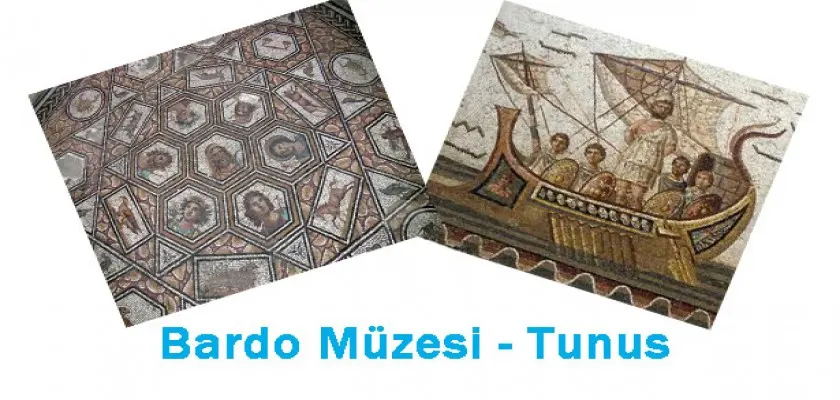
Bardo Museum Awaits Holidaymakers
The Bardo Museum, the world's largest mosaic museum, is located in the capital city of Tunis. Mosaics that were once used as decorations in the wealthy villas of Roman Africa are now waiting for visitors at the museum. The building, which was made into a museum in 1888, dates back to the 17th century.
On the lower floor of the museum, there is an obelisk named Bulla Regia, dating back to 3000 BC. Also, the depiction of Hermaion d’El Guettar, also located on the lower floor, has a history of 40,000 years. The Islamic Museum, dating from the 19th century, is also among the sections on the lower floor. In the part known as the grand reception hall, the Oudhna mosaics are exhibited. Besides the Dougga Room, where cyclops are depicted, there is also a work called La Chebba, symbolizing Neptune's victory.Historical Mosaics and Sculptures
Next to the concert hall on the first floor of the museum, there is a portrait attributed to Virgil. The treasures from the Mahdia region date back to the 1st century BC. You can also see bronze statues from the Greek period.
Another work to see in the museum is the Statue of Hercules, located on the second floor. On the 2nd floor, where many mosaics are found, works belonging to the Roman port of Acholla are exhibited.
The museum can be visited for around 15 Euros, and you may need to set aside a few hours for it. Those who are interested can, of course, spend much more time. If you want to enter the museum without a guide, you need to pay 8 dinars in Tunisian currency. Photography also has a fee. Set aside 1 dinar for photography.