
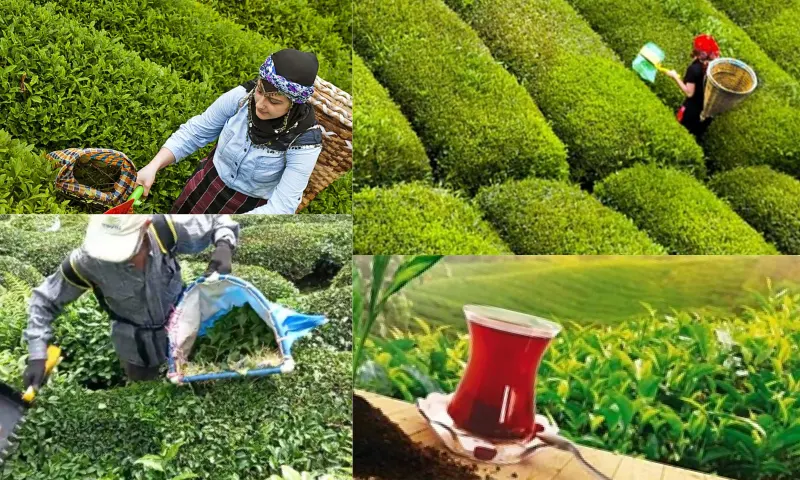
The History and Cultural Significance of Tea Picking
Tea picking, a agricultural activity that has been ongoing for centuries, holds great cultural and economic importance, particularly in East Asia and India. China is known as the place where tea was first cultivated and consumed. Tea was discovered in 2737 BC by the Chinese Emperor Shen Nong. In this period, tea was used for medicinal purposes and gradually became widespread as a social beverage. Tea spread from China to Japan, Korea, and other Asian countries, and then reached Europe in the 17th century. Each region developed its own traditions and techniques in tea picking and processing methods. Today, tea picking continues to be not just an agricultural activity, but also an important ritual and social event in many cultures. For information on this subject and to ask questions you are curious about, you can look at the relevant online companies on the internet pages and examine them in detail.
Tea Picking Techniques and Stages
Tea picking involves several stages that require attention and care. First, it is very important to pick tea leaves at the right time. The highest quality tea leaves are obtained from young and fresh shoots. These shoots are located at the top of the tea plant and are usually picked in the form of two leaves and a bud. Tea picking can be done by hand or by machine. The hand-picking method is preferred for high-quality tea production because it is a more careful and meticulous process. Machine picking, on the other hand, is faster and more efficient, but there is a higher risk of damaging the leaves. The picked leaves are quickly transported to tea factories for processing. During the processing stage, the leaves are withered, rolled, oxidized, dried, and finally sorted. These processes can vary depending on the type and quality of the tea. For example, the oxidation stage is skipped in green tea production, whereas black tea is fully oxidized.
Economic and Environmental Impacts of Tea Picking
Tea picking stands out as a significant economic activity, especially in tea-growing regions. Millions of people worldwide are employed in tea cultivation and picking. Tea is one of the main export products for many countries and plays an important role in economic development. However, the environmental impacts of tea cultivation and picking must also be considered. Intensive tea cultivation can lead to problems such as soil erosion, water pollution, and a decrease in biodiversity. Therefore, implementing sustainable agricultural techniques is important for both reducing environmental impacts and for long-term productivity. Organic tea farming and fair trade practices have emerged as solutions to these problems. Organic farming adopts an environmentally friendly approach by minimizing the use of chemical fertilizers and pesticides. Fair trade, on the other hand, supports social and economic sustainability by ensuring that tea producers earn a fair income. In conclusion, tea picking is an important activity with its historical, cultural, economic, and environmental dimensions. With the right techniques and sustainable practices, the future of this valuable agricultural product can be secured.





