
Sprinkler System: The Wet Barrier Stopping Fire Spread in Production Areas
Technical Differences to Consider When Choosing a Sprinkler System
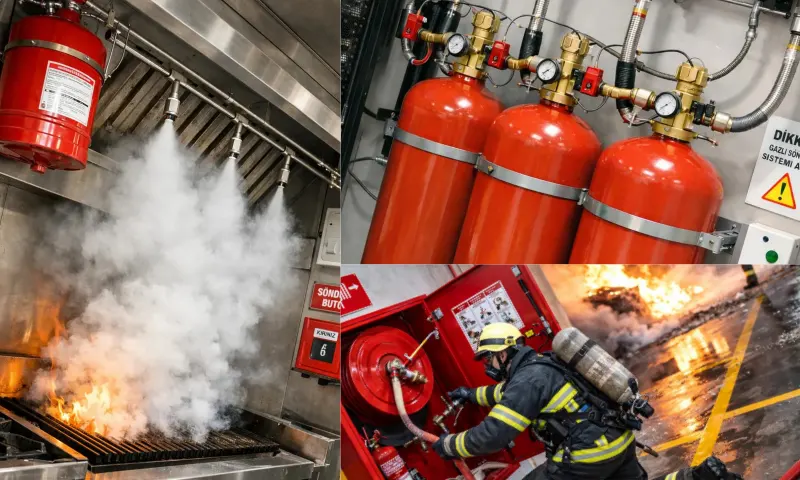
Fighting fire in an industrial facility is not just about extinguishing flames; it's the art of preventing those flames from spreading to adjacent compartments. According to the experience of Ukaz fire and security systems field teams, a properly designed sprinkler system infrastructure can contain a fire by 90% until the fire department arrives. A sprinkler system creates the hydraulic pressure needed for water to reach even the lowest levels, especially in warehouses where aisle spacing is narrow and stacking reaches the ceiling. This is an insurance policy that secures not only the building but also millions of liras worth of goods inside.
When the Sprinkler System Meets Architectural Aesthetics
Every building is different; some are very cold, and in others, there are moments when water should absolutely not be present. The model you need varies according to your building's characteristics.
- Dry Pipe Systems: In unheated warehouses, pipes are filled with air to prevent water inside from freezing; upon activation, the air is discharged, and water flows.
- Deluge Systems: In high-risk areas such as flammable liquid storage tanks, these systems activate all nozzles simultaneously, covering the area with a water curtain.
- Quick Response Heads: In buildings with high human occupancy like hotels and hospitals, sensitive glass bulbs that detect heat much faster are used.
The perception that security systems spoil the visual design of a building is now a thing of the past. In modern architecture, thanks to concealed heads integrated with false ceilings, the system can be made completely invisible; it only descends when a fire occurs to perform its duty. The important thing is to ensure that these aesthetic touches do not compromise the nozzle's water distribution angle. Engineering is a discipline too vital to be sacrificed for aesthetics. Remember that the main control valves must be locked and monitored to ensure your system remains active at all times. There are countless examples of how a small oversight can leave a massive investment vulnerable; therefore, never let up on your technical checklist.